


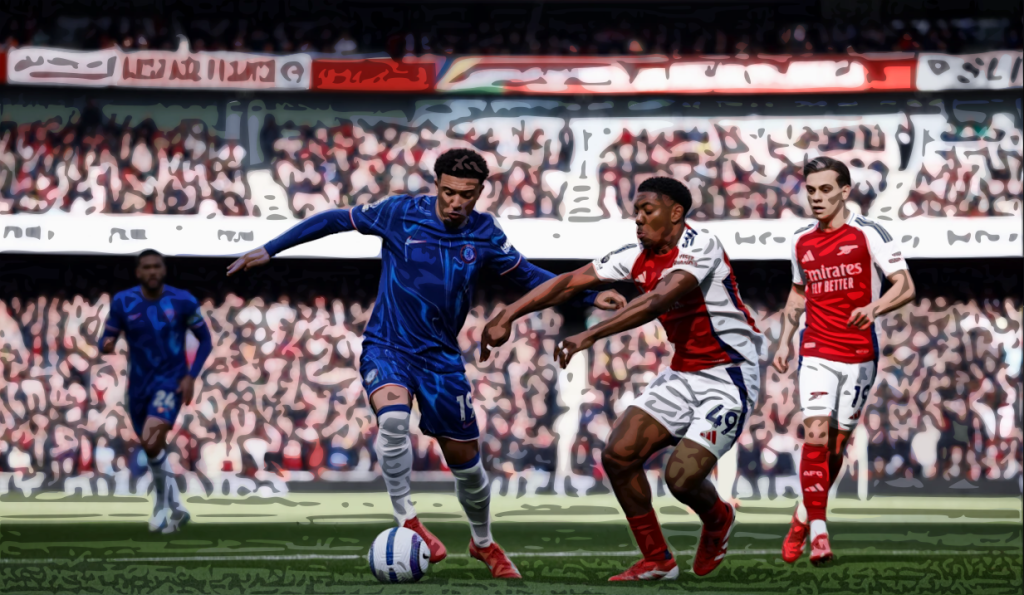
The North London derby between Arsenal and Chelsea, a fixture often laden with drama and tactical intrigue, recently concluded with a resolute 1-0 victory for the Gunners at the Emirates Stadium. While the scoreline suggests a tight and closely contested affair, the underlying narrative revealed a disciplined and efficient performance from Mikel Arteta’s side, particularly in their defensive organization and their decisive exploitation of a set-piece opportunity. This victory, secured by Mikel Merino’s first-half header, not only strengthened Arsenal’s grip on second place in the Premier League but also provided a stark illustration of the fundamental qualities that can often separate contenders from pretenders in the relentless pursuit of success.
For Manchester United, a club undergoing its own evolution and striving to consistently challenge at the highest echelon of English football, Arsenal’s performance against their London rivals offers a compelling case study. In a season marked by flashes of brilliance interspersed with periods of defensive vulnerability and inconsistent chance conversion, the Red Devils could glean valuable insights from Arsenal’s defensive solidity and their clinical exploitation of limited opportunities. Can Manchester United emulate the Gunners’ disciplined approach at the back and learn to maximize their chances with greater efficiency in tight, high-stakes encounters?
The match at the Emirates unfolded with Arsenal demonstrating a clear intent to dictate proceedings from the outset. Despite entering the derby winless in their previous three league matches, Arteta’s men exhibited a renewed focus and intensity. Their early pressure on an unconvincing Chelsea defense yielded a series of opportunities, with Leandro Trossard and Gabriel Martinelli both going close before Declan Rice blazed over after Robert Sanchez in the Chelsea goal had scrambled to parry a deflected clearance. This early dominance, however, did not immediately translate into a tangible lead, highlighting the persistent challenge of converting territorial advantage into goals.
The breakthrough for Arsenal arrived in the 20th minute, a testament to their proficiency from set-piece situations. A right-sided corner delivered by Martin Odegaard found the stooping figure of Mikel Merino at the near post. The Spaniard, operating in a makeshift striker role, executed a neat flick-on header that looped over Sanchez and into the net, rewarding Arsenal for their sustained pressure. This goal underscored the vital importance of set-pieces as a potent weapon in unlocking tight defenses and securing crucial victories, a facet of the game that can often prove decisive in closely fought matches.
While Arsenal’s attack continued to probe, with Martinelli firing over after being set up by Odegaard, their defensive structure remained largely untroubled for much of the first half. Chelsea, missing the injured Cole Palmer, struggled to generate meaningful attacking threats. Their best opportunity before the interval came when Marc Cucurella’s optimistic volley slipped through the grasp of David Raya in the Arsenal goal, but the ball trickled narrowly wide of the far post. This isolated moment of danger did little to disrupt Arsenal’s overall defensive composure and organization.
The second half followed a similar pattern, with Arsenal maintaining control and Chelsea failing to significantly elevate their attacking output. Merino came close to doubling Arsenal’s advantage with a well-struck volley that forced a fine save from Sanchez, but the single first-half goal proved sufficient for the home side. Even as Chelsea sought a way back into the match, their efforts lacked the incisiveness and quality to truly test Arsenal’s rearguard. Cucurella remained Chelsea’s most likely source of an equalizer, but his late header from a substitute’s cross posed little threat to Raya.
Arsenal’s ability to see out the game with a clean sheet was a hallmark of their performance. Their disciplined defensive structure, combined with the individual contributions of their defenders, effectively nullified Chelsea’s attacking endeavors. This defensive solidity provided the platform for their narrow victory, demonstrating the fundamental principle that a clean sheet provides a strong foundation for securing three points, especially when scoring opportunities are at a premium.
For Manchester United, the contrast with Arsenal’s defensive resilience and clinical edge can be instructive. While the Red Devils have showcased their attacking prowess on numerous occasions, their defensive record has at times been inconsistent, conceding goals that have cost them valuable points. Furthermore, there have been instances where Manchester United have created a plethora of chances but failed to convert them with sufficient regularity, leading to frustrating draws or defeats in matches they might otherwise have won.
Drawing parallels between Arsenal’s performance and Manchester United’s needs, several key areas emerge as potential lessons:
- The Importance of Defensive Organization and Discipline: Arsenal’s tight defensive setup against Chelsea highlighted the value of collective organization and individual discipline. Their players maintained their shape effectively, limited Chelsea’s space in dangerous areas, and diligently tracked runners. Manchester United, too, need to cultivate a more consistent level of defensive discipline throughout the entire match. This involves clear communication, effective tracking of opposition attackers, and a collective commitment to maintaining a compact defensive structure, both in and out of possession. Reducing individual errors and improving their ability to defend as a cohesive unit are crucial steps for the Red Devils.
- Capitalizing on Set-Piece Opportunities: Mikel Merino’s winning goal from a corner underscored the significance of set-pieces as a reliable source of goals. Arsenal executed their routine effectively, with a well-directed cross and a decisive header. Manchester United, while possessing players with aerial prowess, have not always maximized their potential from set-piece situations, both in attack and defense. Improving their set-piece routines, both in terms of delivery and attacking movement, could provide them with a valuable additional route to goal and help them unlock stubborn defenses. Similarly, a greater focus on defensive organization during opposition set-pieces is essential to prevent conceding crucial goals.
- Efficiency in Front of Goal: While Arsenal created several opportunities in the first half, they ultimately secured the victory with a single well-taken chance. This efficiency in capitalizing on scoring opportunities, even when limited, is a hallmark of successful teams. Manchester United have often been guilty of squandering numerous chances in matches, allowing opponents to remain in the game and potentially snatch a result. Developing a more clinical edge in front of goal, with players demonstrating composure and accuracy in key moments, is vital for Manchester United to convert their attacking play into consistent victories.
- Maintaining Focus and Composure Throughout the Match: Arsenal maintained their defensive focus and composure for the entirety of the match against Chelsea, effectively negating any sustained periods of pressure from the opposition. Manchester United have at times struggled to maintain this level of concentration for the full 90 minutes, occasionally conceding late goals or losing their defensive shape under pressure. Cultivating greater mental fortitude and ensuring consistent focus throughout the game are essential for Manchester United to secure tight victories and avoid unnecessary dropped points.
To emulate Arsenal’s defensive solidity and clinical edge, Manchester United could consider the following:
- Refining Defensive Drills and Tactical Shape: Dedicate more training time to specific defensive drills that focus on maintaining team shape, tracking runners, and closing down space effectively. Emphasize clear communication and understanding of individual roles within the defensive structure.
- Developing and Practicing Set-Piece Routines: Invest time in designing and rehearsing both attacking and defensive set-piece routines. Analyze opposition weaknesses and tailor routines to exploit them. Ensure clear roles and responsibilities for all players involved.
- Implementing Finishing Drills Under Pressure: Incorporate high-intensity finishing drills in training that simulate game-like scenarios and pressure. Focus on improving players’ composure, decision-making, and accuracy in front of goal.
- Analyzing Game Film for Defensive and Attacking Efficiency: Regularly review match footage to identify areas for improvement in both defensive organization and attacking efficiency. Analyze how Arsenal successfully nullified Chelsea’s attack and capitalized on their opportunity.
- Fostering a Culture of Accountability and High Standards: Instill a culture within the squad where defensive errors and missed chances are addressed and players are held accountable for maintaining high standards of performance throughout every match.
Arsenal’s narrow victory over Chelsea was a testament to their disciplined defensive approach and their ability to seize a crucial scoring opportunity. For Manchester United, a team with aspirations of returning to the pinnacle of English football, the lessons from this North London derby are clear. By prioritizing defensive solidity, maximizing their effectiveness from set-pieces, and cultivating a more clinical edge in front of goal, Manchester United can strive to emulate the fundamental qualities that underpinned Arsenal’s hard-fought victory and ultimately enhance their own pursuit of success in the fiercely competitive Premier League landscape. The blueprint for securing tight victories lies in the details of defensive discipline and capitalizing on the decisive moments that often define such encounters.