


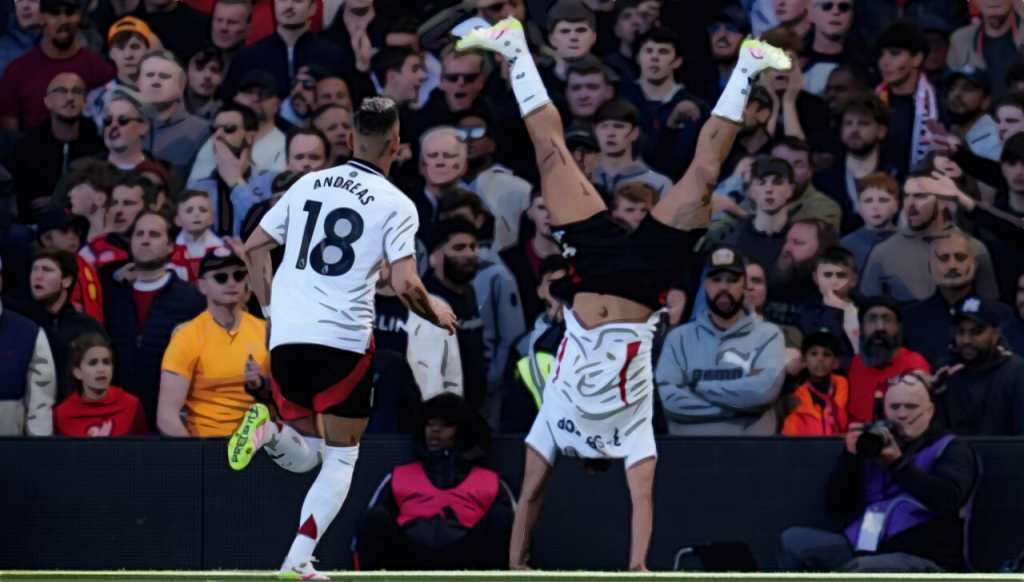
The narrative surrounding Manchester United’s attacking prowess in recent times has often been a singular one, revolving around the undeniable talent and tireless efforts of their Portuguese playmaker, Bruno Fernandes. While his capacity to both orchestrate attacks and arrive in the box to finish them remains a crucial asset, a deeper examination reveals an over-reliance that can stifle creativity and render the team predictable. The need for attacking diversification, for a collective threat that extends beyond the brilliance of one individual, is increasingly apparent at Old Trafford. A compelling case study in the benefits of such versatility can be found in Fulham’s exhilarating first-half performance against a high-flying Liverpool side at Craven Cottage on April 6th, 2025. In a captivating display of attacking intent, Marco Silva’s team dismantled the league leaders’ defense, scoring three goals in a blistering fifteen-minute spell, showcasing a multi-pronged approach that offers valuable lessons for a Manchester United side striving for greater offensive potency.
The match at Craven Cottage unfolded with an early setback for the home side as Alexis Mac Allister unleashed a stunning long-range strike to give Liverpool the lead. However, Fulham’s response was immediate and emphatic, a testament to their proactive mindset and the variety in their attacking arsenal. Just nine minutes after conceding, Fulham found their equalizer. Andreas Pereira delivered a cross from the right that was partially cleared, but the ball fell kindly to Ryan Sessegnon, who connected with a decisive half-volley past Caoimhin Kelleher. This goal highlighted Fulham’s ability to capitalize on second balls in dangerous areas, a trait that demands a collective attacking presence within the box, not solely relying on late runs from midfield. Sessegnon’s strike also demonstrated the threat posed by Fulham’s wider players getting into scoring positions, a dimension that Manchester United have often lacked beyond the occasional brilliance of their wingers.
Fulham’s comeback was completed swiftly, exposing further vulnerabilities in Liverpool’s defense. Just six minutes after their first goal, a defensive lapse allowed Fulham to take the lead. Andy Robertson’s pass was intercepted by Alex Iwobi on the edge of the box, and the Nigerian’s shot found the back of the net, aided by a deflection off the unfortunate Liverpool full-back. This goal underscored Fulham’s alertness to capitalize on opposition errors and the willingness of their attacking players to exploit spaces in and around the penalty area. It was a goal born not of intricate build-up solely reliant on a central orchestrator, but from opportunistic play and a directness in exploiting a defensive miscue.
The third goal, arriving just before half-time, further exemplified Fulham’s attacking diversity and the individual brilliance flourishing within their system. Following a recycled corner, Rodrigo Muniz displayed excellent strength and technique to shrug off Virgil van Dijk, creating space to fire a low shot through Kelleher’s legs. This goal was a product of effective movement in the box during set-pieces, the physical presence of the striker to win his individual battle against a world-class defender, and the clinical finishing required to convert the opportunity. Muniz’s goal showcased a different facet of Fulham’s attack – a focal point capable of holding up the ball and converting chances created through various means, including set-piece scenarios.
In stark contrast, Manchester United’s attacking endeavors in their recent 0-0 draw against Manchester City at Old Trafford painted a different picture. While the clean sheet secured by Ruben Amorim’s side was a positive, the report highlighted their ongoing struggles to generate consistent attacking threat. Their total of 37 Premier League goals this season was noted as being among the lowest in the top flight, underscoring a fundamental issue in their offensive output. The analysis of the game frequently circled back to the influence of Bruno Fernandes. He was recognized as a player capable of both initiating and concluding attacks, often the central figure in their promising moments. However, the commentary also lamented the lack of adequate support for the Portuguese international, with teammates like Alejandro Garnacho being wasteful and the forward line, exemplified by Rasmus Hojlund before his substitution, failing to register shots on goal.
The reliance on Fernandes was further emphasized by descriptions of United’s attacking patterns. While there were instances of nice passing moves, reminiscent of their game against Nottingham Forest, these spells of possession often failed to translate into clear-cut chances that truly troubled the City goalkeeper, Ederson. The early free-kick won by Garnacho was squandered by Fernandes, highlighting the pressure he often faces to be the sole difference-maker in attacking situations. Even when Fernandes managed to create openings with clever passes, teammates struggled to capitalize. This dependency on one player to provide the creative spark and goal threat makes Manchester United’s attack predictable and easier for opposition defenses to nullify.
The contrast with Fulham’s first-half performance against Liverpool is striking. Fulham’s three goals came from three different players, Ryan Sessegnon, Alex Iwobi, and Rodrigo Muniz, with assists coming from Andreas Pereira and indirectly from a Liverpool defensive error. Their goals originated from a variety of situations: a second ball in the box, a capitalized defensive mistake, and individual brilliance following a set-piece. This demonstrates a team where the attacking burden is shared, and threats can emerge from multiple areas of the pitch and through diverse means.
For a current-season check on how widely an attack shares its output, the FPL xG, xA and xGI comparisons help separate goal threat, chance creation and attacking responsibility. Compare the underlying involvement as well as the points already scored, with minutes played kept in view.
Drawing parallels and extracting lessons for Manchester United from Fulham’s attacking display necessitates a closer look at the key elements that underpinned their success in that first half:
- Collective Presence in the Box: Fulham’s equalizer from Sessegnon highlighted the importance of having multiple players arriving in dangerous areas when the ball enters the box. Manchester United often see Fernandes making late runs, but a more concerted effort from other midfielders and wingers to support the central striker in the box could yield more opportunities from crosses and cutbacks.
- Exploiting Defensive Errors with Directness: Iwobi’s goal was a direct consequence of capitalizing on a defensive mistake with immediate intent. Manchester United need to cultivate a similar ruthlessness in punishing opposition errors, with attacking players ready to pounce and exploit openings without hesitation. This requires a forward-thinking mentality and proactive movement off the ball.
- Utilizing the Physicality of a Central Striker: Muniz’s goal showcased the value of a strong central striker capable of winning individual duels and converting chances, including set-pieces. While Manchester United have Hojlund, developing his aerial ability and his capacity to hold off defenders and create space in the box could unlock a different dimension to their attack, making them more threatening from crosses and set-plays.
- Threat from Wide Areas: Sessegnon’s goal also pointed to the potential of attacking full-backs or wing-backs contributing to the goal tally. Manchester United’s full-backs often contribute in the build-up, but a greater emphasis on their runs into the box and their ability to finish could add another layer to their attacking threat.
- Shared Creative Responsibility: While Pereira provided an assist, the overall attacking impetus for Fulham came from various players exploiting opportunities. Manchester United need to foster a system where the creative burden isn’t solely on Fernandes. Encouraging wingers to take on defenders and deliver dangerous crosses, midfielders to make incisive passes from deeper positions, and even defenders to step out and initiate attacks can make their offensive play less predictable.
Tactically, Manchester United could explore formations and player roles that encourage greater attacking involvement from a wider range of players. Utilizing wing-backs who are encouraged to get into the box, or deploying two central attacking midfielders to share the creative load, are potential avenues. Furthermore, specific training drills could focus on improving players’ movement in the box, their ability to capitalize on defensive errors, and their finishing from different angles and situations.
Beyond tactical adjustments, individual player development is crucial. Encouraging the likes of Garnacho and other attacking players to improve their decision-making in the final third, to be more clinical with their chances, and to develop a greater understanding of movement and positioning in the box is essential. Midfielders beyond Fernandes also need to be empowered and encouraged to contribute more directly to goals and assists, whether through late runs, through balls, or shots from outside the box.
In conclusion, while Bruno Fernandes remains an integral part of Manchester United’s attacking setup, the reliance on his individual brilliance alone is proving insufficient for sustained success. Fulham’s vibrant and varied attacking display in the first half against Liverpool serves as a compelling illustration of the benefits of a more collective and versatile approach. Their goals, stemming from different players, different situations, and different areas of the pitch, For Manchester United to evolve into a truly formidable attacking force, they must heed the lessons from Craven Cottage, cultivate a more diversified offensive strategy, and move beyond a singular dependence on the brilliance of their talismanic number ten. The path to greater attacking potency lies in building a team where goals and creativity can flow from various players and through a multitude of avenues, mirroring the impactful firepower that Fulham unleashed on Liverpool’s defense.