


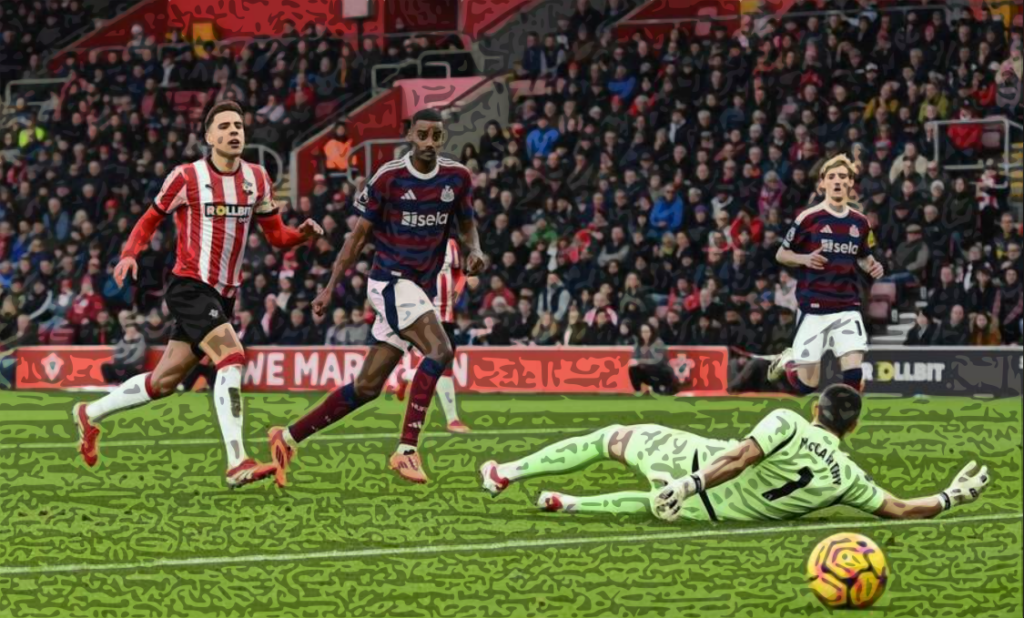
The modern game demands more than just tactical proficiency; it requires an unwavering mental fortitude, the ability to absorb setbacks and mount a swift, decisive riposte. This was on full display recently when Newcastle United, facing an early deficit against Southampton, orchestrated a compelling comeback to secure a 3-1 victory, a performance that offers a wealth of insights for a Manchester United side that has often struggled to maintain consistency and recover from adversity. This article will delve into the specifics of Newcastle’s resilience and what lessons it holds for the Red Devils.
The Tale of Two Halves: Newcastle’s Transformation
The match began with Southampton seizing the initiative, their early goal a clear indication of their intent to dominate at home. However, rather than succumbing to the pressure, Newcastle demonstrated the kind of mental resilience that has often eluded Manchester United. The Magpies, despite going a goal down, remained composed and focused on executing their game plan, showcasing a determination that was instrumental in their turnaround.
- Early Setback: Southampton’s opening goal, a well-placed header, could easily have derailed Newcastle’s approach, but there was no visible panic, no collapse in confidence. Instead, they maintained their discipline, biding their time for an opportunity to strike back.
- Turning the Tide: The turning point came with a penalty decision, awarded after a VAR review. This moment underscored the significance of composure and the ability to exploit opportunities. Isak converted the penalty, igniting a shift in momentum, and the team never looked back.
- Offensive Potency: Following the penalty, Newcastle’s offensive capabilities came to the fore, showcasing an understanding of space and movement. Isak’s second goal, a combination of individual skill and intelligent link-up play with Jacob Murphy, demonstrated the team’s attacking prowess, providing them with a lead they would not relinquish. The key here was the fluidity of Newcastle’s attack, which seemed to unsettle a Southampton defense that had been solid up to that point. This kind of potent attack, blending individual talent and collective movement, is something Manchester United has often lacked this season.
The Isak Factor: A Study in Offensive Impact
Alexander Isak’s performance was emblematic of Newcastle’s comeback. His two goals, a penalty and a composed finish after a well-timed run, not only swung the match in Newcastle’s favor but also highlighted the importance of a striker who can consistently convert chances, and it also showed how crucial the penalty was in terms of momentum shift. Isak’s link-up play, particularly his interplay with Jacob Murphy, demonstrated a level of attacking cohesion that has at times been missing in the Manchester United attack. This was not just about individual brilliance; it was about how Isak’s movements created space for his teammates and opened opportunities for others to contribute.
- Decisive Finishing: Isak’s ability to find the back of the net consistently was a clear difference-maker in the match, an attribute that Manchester United have struggled to replicate this season.
- Linking Play: The striker was also instrumental in the build-up play, creating opportunities for teammates. It is this blend of goal-scoring prowess and creative contribution that makes him such a threat.
- Creating Momentum: It is important to note how the penalty and the second goal gave Newcastle crucial momentum that they used to finish the game strong and grab all three points, while also preventing Southampton from getting back in the game.
Managerial Influence: Setting the Stage for Resilience
While the players are obviously crucial to the success of a team, the role of the manager cannot be understated. In Newcastle’s case, the influence of the manager is very much present in the tactical flexibility and mental resolve of the team. It is clear that the team was well-prepared to deal with a setback, and the manager’s tactics likely played a crucial role in helping the team regroup and take control of the match.
- Tactical Flexibility: The fact that Newcastle were able to react to Southampton’s early goal suggests that the manager has instilled a sense of flexibility within the team’s tactics, enabling them to adapt to different in-game scenarios.
- Mental Fortitude: It is important to look beyond the tactical aspect of the match and analyze the mental aspect. The fact that Newcastle were able to regain their composure after conceding shows the mental toughness that the manager has instilled in the team. This is not simply down to individual players; it’s a collective approach that reflects the values of the club.
- Substitutions: The manager’s tactical acumen was evident in the second half when the substitutes, including Almiron, added more attacking threat to their attack, making it difficult for Southampton to defend. This demonstrates that the manager can adjust according to the flow of the game, and can use substitutions effectively to grab the advantage.
Contrasting Fortunes: Manchester United’s Struggles with Comebacks
In stark contrast to Newcastle’s resilience, Manchester United’s recent performances have shown a worrying tendency to falter after going behind. While the team showed some fight against Fulham, it was more luck than an indication of a well-developed response to a setback. When conceding a goal, the team can often appear disjointed and lacking the necessary mental toughness to recover, as it was made clear when their manager said that his team lacked “ideas and a lack of quality.”
- Fragile Mentality: One of the key differences between Newcastle and Manchester United is that Newcastle showed an unwavering belief, even when faced with adversity, while Manchester United have often appeared mentally fragile, especially when things do not go their way.
- Inability to Adapt: Unlike Newcastle, United have often struggled to adjust their tactics in response to the match’s unfolding narrative, indicating a lack of in-game flexibility that can be detrimental in a league as competitive as the Premier League.
- Dependence on Luck: The victory over Fulham, secured by a deflected shot, highlighted a reliance on luck rather than tactical superiority and mental strength. The fact that the win could be credited to “a huge slice of fortune” should be a worrying sign for any Manchester United fan.
Lessons for Manchester United: Building a Resilient Mentality
Newcastle’s comeback provides a blueprint for Manchester United on how to develop a robust mental approach that can help the team recover from setbacks. It is clear that mental strength and tactical adaptability are crucial to mounting a comeback. Here are key points that United can learn:
- Cultivate a Winning Mindset: Manchester United must foster an environment where players believe in their ability to overturn deficits. This requires a collective mentality of resilience and determination, which can be developed through training and coaching methods.
- Develop Tactical Flexibility: The team needs to be more adaptable, able to adjust their strategy based on the flow of the game. This means having a range of tactical options and the ability to implement them effectively in a match.
- Enhance Midfield Control: To create more consistent scoring opportunities, Manchester United needs to improve midfield control and creativity, an area where teams like Newcastle are clearly excelling. This can be achieved through more training and by adding players with specific qualities that can elevate the team’s ability to control matches.
- Clinical Finishing: It is also important to improve the team’s finishing, as a clinical striker can be the difference between winning and losing. Players need to be encouraged to take more chances, and they need to make the most of the opportunities they create.
- Managerial Impact: The role of the manager in fostering this kind of change cannot be understated. It is his job to ensure the team is tactically prepared and, more importantly, mentally ready to deal with any in-game scenario. The manager must also adjust his tactics and use his substitutes effectively to change the flow of the game.
Conclusion
Newcastle’s comeback against Southampton was not just a victory; it was a masterclass in mental fortitude and tactical adaptation. For Manchester United, it serves as a clear indication of the areas they need to improve. It’s not enough to simply possess talent; the team must cultivate a resilient mindset and tactical flexibility that allows them to respond to setbacks, control matches and capitalize on opportunities. By learning from Newcastle’s example, Manchester United can move closer to being a team capable of consistently overcoming challenges, recovering from setbacks, and securing important victories.