In a Premier League clash that epitomized the unpredictable nature of football, Everton and Manchester United played to a 2-2 draw, a result that underscored the critical importance of sustaining momentum and capitalizing on opportunities. The match, held at Goodison Park, was a tale of two halves, with Everton dominating the first and Manchester United staging a spirited comeback in the second. This long-form analysis delves into the tactical nuances of the game, dissecting Everton’s inability to maintain their lead, exploring Manchester United’s resurgence, and examining the lessons both teams can learn from this enthralling encounter.
Everton’s Early Dominance: A Commanding First Half
Everton, under the guidance of David Moyes, started the match with a clear game plan: press high, disrupt Manchester United’s build-up play, and exploit the spaces behind their defense. This approach paid dividends early on, as Everton’s energy and intensity unsettled the visitors.
- Beto’s Impact: The in-form striker, Beto, continued his rich vein of form, scoring the opening goal in the 19th minute. His ability to latch onto Doucoure’s header and volley the ball over Onana showcased his predatory instincts and technical prowess. This marked his fifth goal in the past four matches, highlighting his importance to Everton’s attack.
- Doucoure’s Contribution: Abdoulaye Doucoure, returning to the lineup, proved to be a pivotal figure in Everton’s midfield. His energy, tackling, and ability to win aerial duels provided a solid foundation for Everton’s attacks. Doucoure doubled Everton’s lead in the 33rd minute, heading home after Onana parried Harrison’s shot.
- Tactical Flexibility: Moyes deployed his team in a manner that maximized their strengths and exploited Manchester United’s weaknesses. The Toffees’ utilized a swift counter-attack, releasing Lindstrøm down the right, testing the United’s defense. This tactical flexibility, combined with the players’ commitment, allowed Everton to dominate possession and create numerous scoring opportunities.
- Defensive Solidity: Everton’s defense, led by Tarkowski and Branthwaite, was well-organized and disciplined in the first half. They limited Manchester United to speculative long-range efforts, with Pickford largely untroubled. The center-back partnership successfully contained United’s attacking threats, providing a platform for Everton to build their attacks.
The Turning Tide: Manchester United’s Second-Half Resurgence
Trailing by two goals at halftime, Ruben Amorim, Manchester United’s manager, faced a significant challenge. Recognizing the need for change, he made tactical adjustments and instilled a renewed sense of urgency in his players.
- Tactical Shifts: Amorim’s halftime adjustments were crucial in shifting the game’s momentum. The introduction of Garnacho for Casemiro in the 62nd minute injected pace and directness into United’s attack. Furthermore, the substitution of Obi for Hojlund in the 70th minute provided a different dimension to United’s forward line.
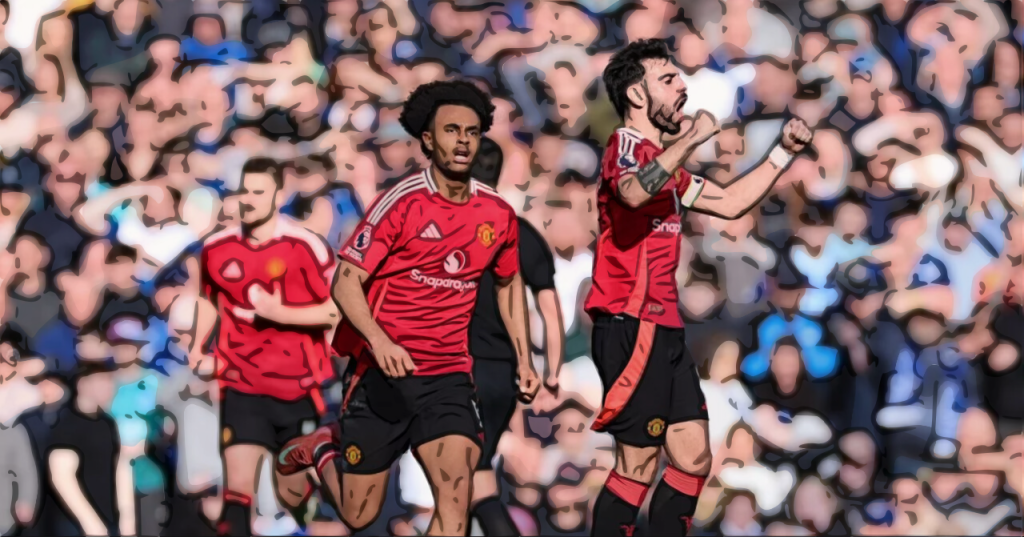
- Fernandes’ Inspiration: Bruno Fernandes, Manchester United’s captain, stepped up to lead his team’s comeback. His stunning free-kick in the 72nd minute not only reduced the deficit but also ignited a spark in United’s attack. Fernandes’ ability to curl the ball into the bottom corner showcased his technical brilliance and provided a much-needed boost for his team.
- Ugarte’s Impact: Manuel Ugarte, the Uruguayan midfielder, completed Manchester United’s comeback with a well-taken volley in the 80th minute. Ugarte’s goal, his first for the club, was a testament to his determination and provided a fitting reward for United’s persistent pressure. His ability to latch onto a cleared free-kick and strike the ball with precision demonstrated his technical capabilities and composure in crucial moments.
- Increased Intensity: Manchester United’s second-half performance was characterized by a significant increase in intensity and urgency. They pressed higher up the pitch, won more tackles, and created more scoring opportunities. This renewed energy unsettled Everton and forced them to defend deeper, ultimately leading to United’s comeback.
Analyzing Everton’s Inability to Maintain Their Lead
Despite their dominant first-half performance, Everton failed to maintain their advantage, succumbing to Manchester United’s second-half pressure. Several factors contributed to this decline:
- Loss of Momentum: Everton lost their momentum in the second half, failing to replicate the energy and intensity that characterized their first-half performance. This allowed Manchester United to gain control of the game and dictate the tempo.
- Defensive Vulnerabilities: Everton’s defense, which had been solid in the first half, began to show vulnerabilities under increased pressure from Manchester United. The center-backs struggled to contain United’s attacking threats, and Pickford was forced into making several saves.
- Lack of Attacking Threat: Everton’s attacking threat diminished in the second half, with Beto and Harrison unable to replicate their first-half performances. This allowed Manchester United to focus on their defense, further stifling Everton’s chances of extending their lead.
- Missed Opportunities: Everton had opportunities to extend their lead in the second half, but failed to capitalize. O’Brien’s cross for Doucoure on the half turn was smacked first time into Onana. This lack of clinical finishing proved costly, as Manchester United eventually capitalized on Everton’s missed opportunities and mounted their comeback.
Lessons Learned: Maintaining Momentum and Securing Results
The 2-2 draw between Everton and Manchester United provided valuable lessons for both teams:
- Importance of Sustaining Momentum: For Everton, the match highlighted the importance of sustaining momentum throughout the entire game. Their inability to replicate their first-half performance in the second half proved costly, as Manchester United capitalized on their decline and mounted a successful comeback.
- Capitalizing on Opportunities: Both teams missed opportunities to secure a victory, underscoring the importance of clinical finishing and making the most of scoring chances. Everton’s inability to extend their lead in the second half and Manchester United’s squandered chances in the first half ultimately contributed to the draw.
- Tactical Flexibility and Adaptability: The match showcased the importance of tactical flexibility and adaptability. Amorim’s halftime adjustments proved crucial in shifting the game’s momentum in Manchester United’s favor.
- Defensive Resilience: Maintaining defensive resilience is critical for securing results. Everton’s defense, which had been solid in the first half, faltered under increased pressure from Manchester United. Teams must maintain their defensive discipline and organization throughout the entire game to prevent opponents from capitalizing on defensive vulnerabilities.
- Leadership and Inspiration: The role of leadership and inspiration cannot be overstated. Fernandes stepped up to lead Manchester United’s comeback, inspiring his teammates with his stunning free-kick and relentless work rate.
Conclusion: A Valuable Lesson in Premier League Football
The 2-2 draw between Everton and Manchester United was a captivating encounter that underscored the unpredictable nature of football. While Everton will rue their inability to maintain their lead, Manchester United will take heart from their spirited comeback. Ultimately, the match served as a valuable reminder of the importance of sustaining momentum, capitalizing on opportunities, and maintaining tactical flexibility in the pursuit of success in the Premier League.


