
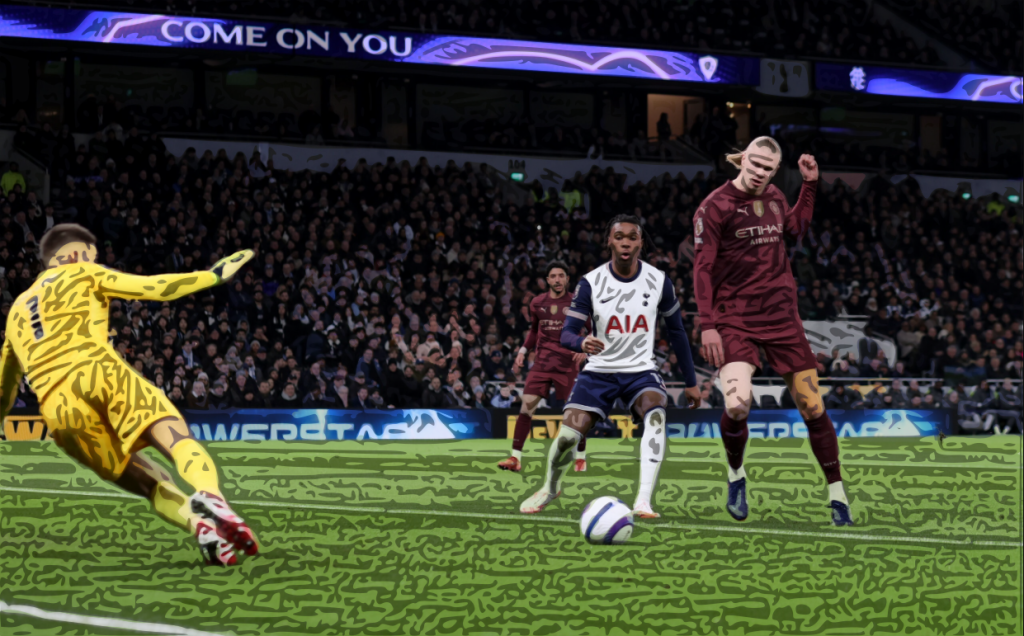
Manchester City’s recent victory over Tottenham, sealed by Erling Haaland’s decisive goal, wasn’t just a display of individual brilliance, but a testament to the power of a well-executed pressing game. This strategic approach, characterized by relentless pressure on the opponent, suffocates their build-up play and creates high-value scoring opportunities. For Manchester United, a club seeking to reclaim its place among Europe’s elite, adopting a similar pressing strategy could be the key to unlocking a new level of attacking potency and defensive solidity.
The Anatomy of City’s Press: A Blueprint for Success
Manchester City’s pressing game is not merely about chasing the ball; it’s a carefully orchestrated system with specific triggers, roles, and responsibilities. The match against Tottenham provides a clear illustration of its effectiveness.
- Relentless Pressure from the Front: City’s forwards, particularly Jeremy Doku and Erling Haaland, spearheaded the press, constantly harrying Tottenham’s defenders and midfielders in possession. This pressure forced turnovers in dangerous areas and disrupted Tottenham’s attempts to play out from the back.
- Coordination and Triggers: City’s pressing is not a haphazard affair. Specific triggers, such as a misplaced pass or a heavy touch, signal the start of the press, with players swarming the ball in a coordinated manner.
- Compactness and Support: The players behind the forward line provide crucial support, maintaining a compact shape to limit passing lanes and prevent Tottenham from escaping the press. This ensures that even if the initial press is unsuccessful, the opponent is still forced into a difficult situation.
- Haaland’s Impact: Haaland’s presence alone forces defenders to rush decisions, and his work rate off the ball sets the tone for the rest of the team. His ability to anticipate and intercept passes adds another layer of threat to City’s pressing game.
The result was that Tottenham struggled to build any sustained attacking momentum, spending much of the first half pinned inside their own half. City’s dominance in possession, a staggering 66% at one point, was a direct result of their effective pressing and ability to win the ball back quickly in advanced areas.
Manchester United’s Pressing Deficiencies: An Area Ripe for Improvement
While Manchester United possesses talented attacking players, their pressing game has often lacked the intensity, coordination, and tactical intelligence seen in teams like Manchester City. This deficiency contributes to several key issues:
- Inconsistent Pressure: The forward press is often sporadic and uncoordinated, allowing opponents to play through the lines too easily.
- Lack of Intensity: Manchester United’s forwards, while skillful, sometimes lack the relentless work rate required to consistently harry defenders and force turnovers.
- Defensive Exposure: A weak press leaves the midfield and defense exposed, forcing them to cover large amounts of space and defend against counter-attacks.
Without a cohesive and aggressive pressing game, Manchester United struggles to control matches, win the ball back in dangerous areas, and create the sustained attacking pressure needed to break down stubborn defenses.
Learning from the Best: Key Principles for Manchester United’s Pressing Revolution
To emulate Manchester City’s success, Manchester United needs to adopt a comprehensive approach to pressing, focusing on several key principles:
- Define Clear Pressing Triggers: Manchester United needs to establish specific triggers that initiate the press. These could include:
- Back passes: Triggering an immediate surge of pressure on the goalkeeper and defenders.
- Opponent taking a heavy touch: Capitalizing on moments of vulnerability to swarm the ball-carrier.
- Passes into congested areas: Trapping opponents in tight spaces and forcing turnovers.
- Implement a Coordinated Pressing Structure:
- Forward Line Responsibility: The forwards must be the first line of defense, pressing with intensity and intelligence to force errors.
- Midfield Support: The midfield needs to provide immediate support, closing down passing lanes and preventing the opponent from escaping the press.
- Defensive Line Positioning: The defensive line must maintain a high line, compressing the space and ensuring that the opponent has limited room to operate in.
- Develop a Relentless Work Ethic:
- Fitness Training: Manchester United’s players need to be in peak physical condition to maintain the high-intensity pressing game for the full 90 minutes.
- Mental Fortitude: Players must be mentally prepared to commit to the press, even when it’s physically demanding.
- Adapt Pressing Strategies Based on the Opponent:
- Analyzing Opponent’s Strengths and Weaknesses: Before each match, Manchester United needs to analyze the opponent’s build-up play and identify potential weaknesses to exploit.
- Adjusting Pressing Intensity: Manchester United should be able to vary their pressing intensity based on the opponent and the game situation, knowing when to press high and when to drop into a more compact defensive shape.
Player Roles and Responsibilities: A United Front
For a pressing game to be effective, each player must understand their role and responsibilities within the system. Here’s how Manchester United’s key players could contribute:
- The Striker (J. Zirkzee): As the first line of defense, the striker must set the tone for the press, relentlessly harrying defenders and goalkeepers. J. Zirkzee can improve his pressing intensity and coordination.
- Wingers: The wingers must press aggressively, cutting off passing lanes and forcing opponents to play inside, where they can be trapped.
- Central Midfielders (B. Fernandes, M. Ugarte): The central midfielders are the engine room of the press, providing crucial support to the forwards and winning the ball back in midfield. They must be tireless in their work rate, disciplined in their positioning, and intelligent in their reading of the game.
- Full-Backs: The full-backs must be ready to jump out and press the opponent’s wingers, preventing them from having time and space to deliver crosses.
- Center-Backs: The center-backs must maintain a high line and be prepared to step up and win the ball back if the initial press is broken.
Tactical Drills and Fitness Regimens: Building a Pressing Machine
Implementing a high-intensity pressing game requires specific training drills and fitness regimens. Here are some examples:
- Pressing Trigger Drills:
- Objective: To improve the team’s ability to recognize pressing triggers and react quickly.
- Setup: Divide the team into two groups: attackers and defenders. The coach initiates the drill by playing a pass to one of the attackers.
- Execution: The defenders must immediately press the ball-carrier and attempt to win the ball back. The attackers must try to maintain possession and play out of pressure.
- Compactness and Support Drills:
- Objective: To improve the team’s ability to maintain a compact shape and provide support to the press.
- Setup: Divide the team into three groups: pressing unit, supporting unit, and opposition.
- Execution: The pressing unit presses the opposition, while the supporting unit provides cover and closes down passing lanes. The opposition attempts to play through the press.
- High-Intensity Interval Training (HIIT):
- Objective: To improve the players’ cardiovascular fitness and ability to maintain high-intensity efforts for extended periods.
- Exercises: Sprints, shuttle runs, and interval runs with short recovery periods.
- Strength and Conditioning:
- Objective: To improve the players’ strength, power, and agility, enabling them to press with greater force and recover quickly.
- Exercises: Squats, lunges, plyometrics, and core exercises.
By incorporating these drills and regimens into their training program, Manchester United can develop the physical and tactical capabilities needed to execute a successful pressing game.
Case Study: Jeremy Doku and the Art of Pressing from the Wing
Jeremy Doku’s performance for Manchester City against Tottenham provides a valuable case study in how to press effectively from the wing. Doku’s relentless energy, pace, and tactical awareness allowed him to:
- Harrass Tottenham’s Full-Backs: Doku constantly pressured Tottenham’s full-backs, preventing them from having time and space to deliver crosses or play passes into midfield.
- Cut off Passing Lanes: Doku intelligently positioned himself to cut off passing lanes, forcing Tottenham to play long balls or make risky passes into congested areas.
- Win the Ball Back in Advanced Areas: Doku’s pressing often led to turnovers in dangerous areas, creating scoring opportunities for himself and his teammates.
Manchester United’s wingers can learn from Doku’s approach by focusing on their work rate, tactical positioning, and ability to anticipate the opponent’s moves.
Overcoming Challenges and Implementing a Long-Term Vision
Implementing a pressing game at Manchester United will not be without its challenges. Some potential obstacles include:
- Player Buy-In: Some players may be resistant to the demands of a high-intensity pressing game, particularly if they are not used to working so hard off the ball.
- Tactical Complexity: A pressing game requires a high level of tactical understanding and coordination, which can take time to develop.
- Risk of Burnout: A relentless pressing game can be physically and mentally demanding, increasing the risk of player burnout and injuries.
To overcome these challenges, Manchester United needs to:
- Communicate a Clear Vision: The manager must clearly communicate the importance of pressing and how it fits into the team’s overall tactical strategy.
- Provide Individualized Feedback: Players need to receive regular feedback on their pressing performance, highlighting areas for improvement.
- Manage Workload and Rotation: The manager must carefully manage the players’ workload and rotate the squad to prevent burnout and injuries.
Implementing a successful pressing game is a long-term project that requires patience, dedication, and a commitment to continuous improvement.
The Path to Redemption: A United Future Built on Pressure
For Manchester United, adopting a high-intensity pressing game is not just about improving their defense; it’s about transforming their entire approach to football. By pressing with intelligence, intensity, and coordination, Manchester United can:
- Dominate Possession: Win the ball back in advanced areas and control matches.
- Create More Scoring Opportunities: Force turnovers in dangerous areas and unleash their attacking talents.
- Become a More Difficult Team to Beat: Suffocate the opponent’s build-up play and limit their scoring chances.
Manchester United’s journey back to the top of English and European football will be a long and arduous one, but by embracing the power of pressing, they can take a significant step towards reclaiming their place among the game’s elite. The blueprint is there, the players are capable, and the potential rewards are immense. It’s time for Manchester United to unleash the pressure.


